


Page 12 - In a different register - Sample
P. 12
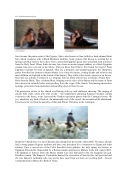
New York Metropolitan OperaSara became the patron saint of the Gypsies. She is also known as Sara-la-Kali or dark-skinned Saint Sara which resonates with a Black Madonna tradition. Some gypsies that throng to worship her in Spring each May believe her to have been a powerful Egyptian queen who welcomed tired travellers from the Holy Land. Others think she may have been an ancient pagan goddess or a black Egyptian woman who was a servant to the Marys. Did you know that Gitan is the French for Gypsy? From Egiptano or gitano for short in Spanish. They are a homeless and wandering people. Far flung they gather from the four corners to Sainte-Maries. It is a time of reunion, visiting friends and relatives and most children are baptized in the church of the Saintes. They settle in the streets, squares or on the sea. Here they are at home. Foremost it is a religious festival, filled with fervour in honour of Saint Sara – Holy Sara the Black. They celebrate Mass, bringing out the relics of the Marys and the statue of Saint Sara dressed in colourful robes and jewellery from the crypt of the church: Proclaiming miraculous healings, protection from misfortune and parading down to bless the sea.The procession returns to the church overflowing with joy and exuberant cheering. The ringing of church bells slides easily into wild revelry – the tempestuous pulsating flamenco rhythms calling everyone to the dance, to the feast and the Gardien equestrian games with the Camargue horses. Oh yes, absolutely my kind of festival. An untameable reel of the sacred, the sensual and the abandoned. It seemed a far cry from the austerity of that mid-Winter Christmas in the Camargue.Inside the Church there is a non-Christian altar dating from the fourth century BCE. The place already had a strong pagan religious tradition and there was precedent for a connection to Egypt and other cultures. Once a sacred site of the Celtic threefold water goddess, the holy spring was known as Oppidum Priscum Ra. Superseded by a Roman temple dedicated to Mithras in the 4th century BCE. The oppidum or fortress where the Marys landed was once dedicated to Ra, the Egyptian sun god. Residues remain. The Emperor Constantine banned the veneration of Sara but her cult persisted and she was linked to Aphrodite who was said to have risen from sea foam on a scallop shell – forever commemorated in Botticelli’s Birth of Venus.


