


Page 13 - In a different register - Sample
P. 13
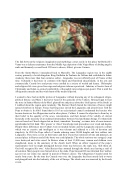
The link between the religious imagination and mythology comes easily in this place but Botticelli’s Venus was a delicate renaissance from the Middle Age depiction of the Virgin Mary of abiding angelic smile and demurely covered head. If I have to choose, Albert, give me Carmen.From the Sainte-Maries I meandered back to Marseille. The Languedoc region was in the eighth century primarily a Jewish kingdom. King Guilhelm de Toulouse de Gellone had established a Judaic Academy there more than four centuries earlier. Languedoc was not officially part of France at that time. Culturally it had more in common with Spain and flourished educationally, in the arts and commercially. Courtly love and poetry were extolled in a society of wealth and luxury. Philosophy and religious life were given free reign and religious tolerance practised. Judaism, a Gnostic form of Christianity and Islam co-existed comfortably, a thoroughly inter-religious pot-pourri. That is until the Albigensian crusades and the witch hunts of the medieval period.I seemed to have had an idyllic picture of Languedoc without knowing any of its subsequent religio- political history, said Mary. I had never heard of the genocide of the Cathars. Having begun to hear the story in Saintes-Maries-de-la-Mer I gleaned bits and pieces about the ‘foul leprosy of the South’ as I rambled about the region quite randomly. The Roman Church feared the infection of heresy might spread elsewhere in Europe. France had long since envied the Languedoc and joined forces with the Pope to obtain it. In Albi I found that in 1165 an ecclesiastical council condemned the heretics who became known as the Albigensians and in other places, Cathars. It seems the objection to them lay in their belief in the equality of the sexes, reincarnation, and their denial of the validity of clerical hierarchy or the necessity of an ordained intermediary between God and human beings. For them faith was not based on Church dogma but on direct, immediate ‘knowing’, an inner state of consciousness apprehended at first hand. This ‘gnosis’ or ‘direct’ knowledge took precedence over creed and dogma. Despite these differences most Cathars were not unduly fanatic and the Languedoc enjoyed a culture which was as creative and intelligent as it was tolerant and adhered to a life of devotion and simplicity. In 1209 the Pope called a Crusade ordering some 30,000 knights and foot soldiers into Languedoc. They wore a cross on their tunics and their reward was remission of sins and penances, an assured place in Heaven and all the booty one could plunder. The whole territory was ravaged, crops were destroyed and cities razed. In Beziers alone at least 15,000 men, women and children were slaughtered, many in the sanctuary of the church itself. When an officer inquired of the pope’s representative how he might distinguish heretics from true believers, the reply was, ‘Kill them all. God will recognise His own.’ After Beziers they stormed through the whole area leaving a trail of devastation. Many people were burned alive at the stake. Pope Innocent III was informed that ‘neither, age nor sex nor status was spared’ in pursuit of Rome’s decree. The Albigensian Crusade lasted for nearly forty years. By the time the Crusade was over, the Languedoc had been utterly laid to waste and plunged back into the barbarity of the rest of Europe. The whole area was annexed by the French crown.


